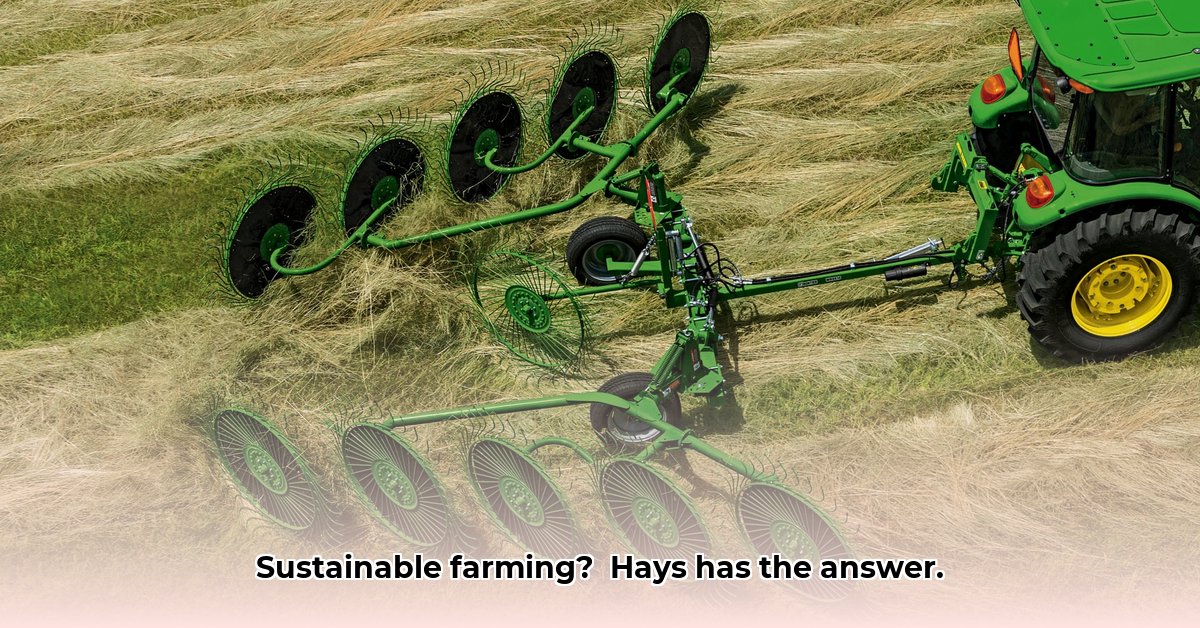
Hays Tractor, a family-owned business with a legacy spanning over 70 years, has become a cornerstone of the agricultural community. Their partnership with Kubota, a leading manufacturer of agricultural machinery, provides farmers with access to high-quality equipment. But how does this translate to genuinely sustainable farming practices? This article delves into the intersection of Hays Tractor, Kubota equipment, and the evolving landscape of environmentally conscious agriculture. For more information on Kubota equipment, visit Kubota resources.
Kubota Equipment: Precision and Potential
Kubota's reputation for innovation and efficiency is well-earned. Their machines are designed to optimize performance, inherently suggesting potential benefits for environmentally conscious farming. Hays Tractor's selection of Kubota equipment presents a pathway towards resource-efficient agriculture. However, a critical gap exists: readily available, detailed data on the precise environmental impact of these machines. This lack of transparency is an area demanding immediate improvement. More specific information on fuel consumption, emissions, and lifecycle assessments of Kubota equipment is crucial for strengthening their sustainability claims. Wouldn't it be invaluable to have readily accessible, independent verification of fuel efficiency and emission data for each model?
The Hays Tractor Approach: Personalized Partnerships
Hays Tractor's strategy transcends mere equipment sales. They emphasize deeply understanding each customer's unique needs, carefully matching farmers with the tools best suited to their specific farming practices. This personalized approach facilitates the implementation of sustainable practices tailored to individual farm contexts. It’s a testament to their long-term vision, which prioritizes building relationships as much as selling tractors. This customer-centric approach fosters trust and allows for more effective collaboration in the adoption of sustainable farming methods. How many other dealerships prioritize this kind of close relationship with their clients?
Transparency: A Foundation for Trust
While the potential for sustainable practices using Hays Tractor's Kubota equipment is clear, the absence of readily accessible sustainability data poses a significant hurdle. Providing concrete, verifiable information—such as detailed fuel efficiency ratings, emission data under various operating conditions, and comprehensive lifecycle environmental impact assessments—is paramount. This transparency is essential not only for building trust with farmers but also for demonstrating a genuine commitment to environmental responsibility. Independent verification of sustainability claims would further enhance credibility and build confidence among consumers.
A Path Forward: Actionable Steps for Sustainable Growth
To fully embrace its potential as a leader in sustainable agriculture, Hays Tractor should prioritize these steps:
Comprehensive Sustainability Audit: A thorough, independent audit of their entire Kubota equipment range is essential. This audit should meticulously assess environmental impacts across the entire product lifecycle, from manufacturing to disposal, identifying opportunities for improvement.
Quantifiable Marketing: Instead of general claims, Hays Tractor needs to present precise, verifiable data. Marketing materials should clearly and concisely state fuel consumption rates, emission levels, and other relevant metrics for each Kubota model. Independent verification should be readily available to bolster consumer confidence.
Strengthening the Kubota Partnership: Collaborative efforts are crucial. Hays Tractor should actively collaborate with Kubota to develop a robust data collection strategy, ensuring consistent and accurate information is readily accessible. Joint marketing initiatives emphasizing sustainability features should be deployed to maximize impact.
Empowering Farmers Through Education: Workshops, consultations, and online resources focusing on sustainable farming techniques using Kubota equipment would be invaluable assets. Providing farmers with the knowledge and skills to maximize the environmental benefits of the equipment is crucial for responsible implementation. Best-practice guides and case studies of successful sustainable farming operations would accelerate adoption.
The Future of Farming: A Collaborative Endeavor
The transition to genuinely sustainable agriculture is an evolving process. Hays Tractor, with its customer-focused approach and access to Kubota's technological advancements, is well-positioned to lead this transition. However, progress demands a resolute commitment to transparency, robust data collection, thorough farmer education, and ongoing collaboration with Kubota. This isn't simply about selling tractors; it's about fostering a sustainable future for agriculture—where profitability and environmental stewardship converge. The journey is ongoing, but with decisive action, a greener future for farming is attainable.